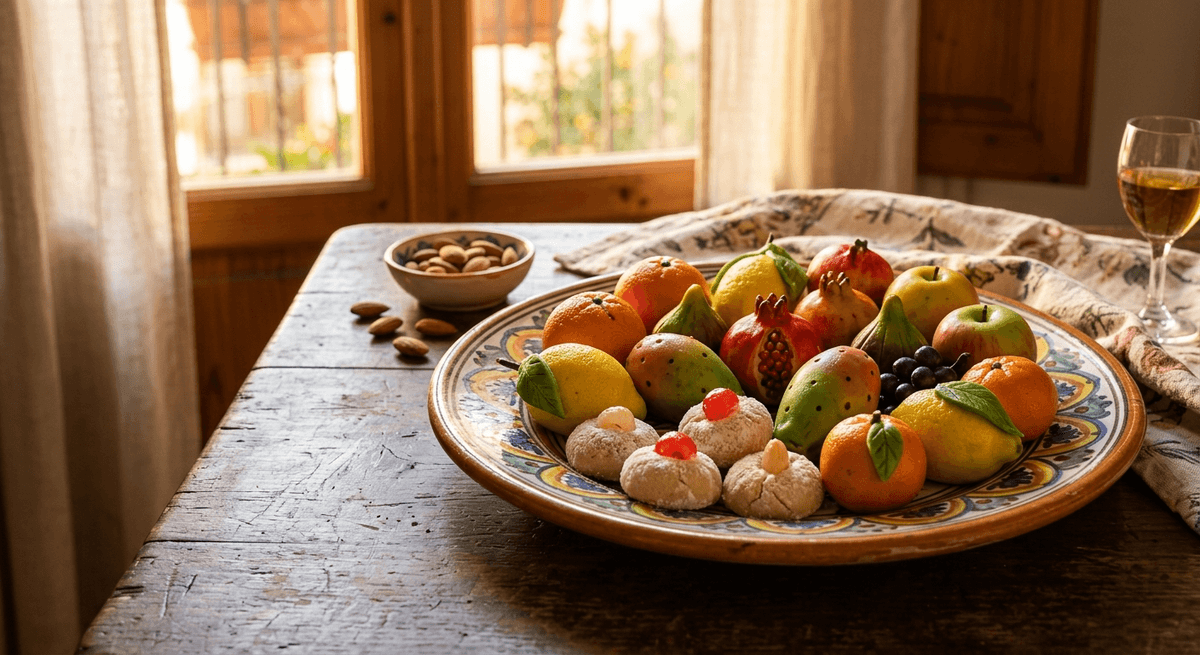
Dolci di mandorla
Dolci di mandorla are one of the finest expressions of Sicilian pastry-making, born from the convent tradition of Agrigento. Pasta reale, made with finely ground almonds and sugar, is the heart of this recipe which also includes the celebrated Frutta di Martorana: small masterpieces modeled in the shape of fruit and decorated with vibrant colors. These sweets represent the perfect union of ingredient simplicity and extraordinary elegance in the final result.
Preparation
- 1
Finely blend the peeled almonds until you obtain a homogeneous powder, being careful not to create almond butter.
- 2
Mix the finely ground almonds with the semolina sugar, sifting both ingredients together to prevent lumps.
- 3
Gradually add the egg white and orange blossom water, kneading by hand until you form a homogeneous and malleable paste.
- 4
Roll out the pasta reale between two sheets of baking paper and let it rest for 15 minutes, then use it as a base to model fruit shapes.
- 5
Model small portions of paste into the shapes of strawberries, oranges, bananas and other fruits, working the mixture with your fingers and using molds if available.
- 6
Prepare the royal icing by mixing icing sugar, egg white and lemon juice until you obtain a creamy consistency.
- 7
Paint the sweets with the icing and food coloring, creating naturalistic details and realistic shading.
- 8
Place the sweets on baking paper and let them dry for at least 2-3 hours in a dry place before serving.
- 9
Store in a box with baking paper at room temperature, away from sources of moisture.
Chef's Tips
The quality of almonds is essential: prefer fresh Sicilian almonds, peeled manually. If the mixture is too dry, add a few drops of orange blossom water; if too moist, incorporate more almond powder.