La Corsa degli Zingari (The Gypsies' Race)
location_onPacentro, L Aquila e Gran Sasso
Date
September 5 – September 6, 2026
Admission
Free
Audience
Everyone
Weather
Check weather
La Corsa degli Zingari is a centuries-old tradition with roots in the Middle Ages that continues to preserve its spiritual and devotional allure intact. Every 5th and 6th of September, in Pacentro in the province of L'Aquila, dozens of participants from across Italy and abroad undertake this extraordinary feat of faith and physical endurance in honor of the Madonna di Loreto, to whom a small church within the town's walls is dedicated.
Origins and History The origins of the race trace back to the Middle Ages, when it represented an act of penance and Marian devotion. Over the centuries, the event has maintained its fundamental elements unchanged, transforming into a symbol of collective identity for the Pacentro community. Historical archives attest to how this tradition has endured through wars, famines, and social upheaval, remaining an authentic expression of Abruzzo's popular faith.
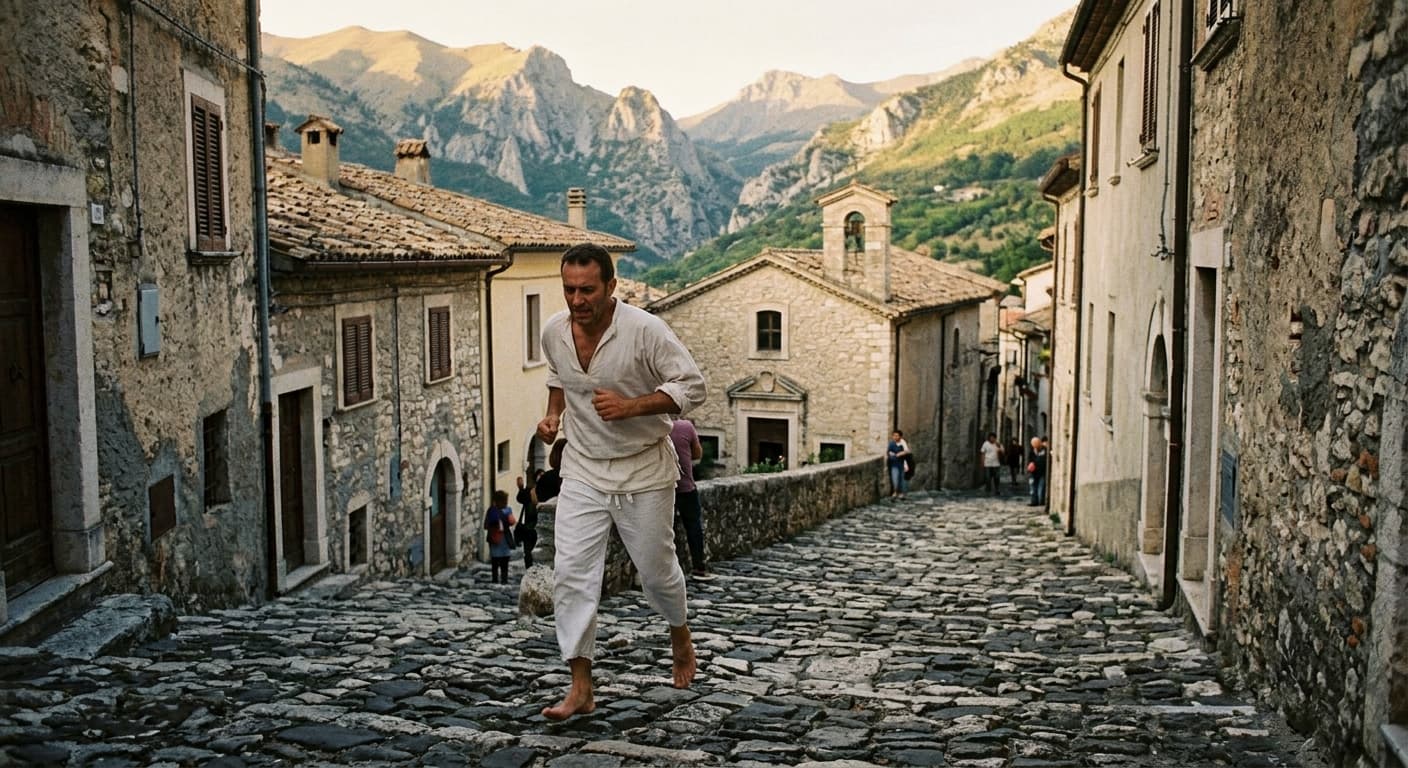
The Course: Suffering and Spirituality The event is characterized by a challenging and fascinating route of approximately 800 meters. From the summit of a rocky outcrop at over 700 meters altitude, runners descend barefoot strictly down to the Vella stream, facing sharp stones, brambles, and thorny vegetation that inevitably lacerate their feet. This initial stretch, called ‹la discesa› (the descent), represents purification through suffering. Subsequently, participants laboriously climb the narrow medieval streets of the town to reach the Madonna's altar, a path that blends physical pain and spiritual elevation in a single mystical experience.
Participation and Numbers Currently the race attracts 30-50 runners annually, extraordinary figures of the devoted who defy pain to honor their promise. Many participants are experienced athletes who train specifically for this challenge, while others are local residents perpetuating family tradition. Pilgrims from other Italian regions also participate, seeing in this race a unique spiritual experience.
Testimonies and Anecdotes Participants recount a transformative experience: ‹When you reach the altar, the pain in your feet disappears, replaced by a sensation of profound peace,› confides Marco, a runner who has participated for fifteen years. Pacentro's elderly recall how, in past decades, the race represented a moment of community cohesion where townspeople solemnly welcomed the runners at the finish.
The Prize and Conclusion The race concludes with a moment of great evocative power: medical care organized at the altar, where local volunteers and nurses assist the runners. This is followed by the solemn proclamation of the winner, who receives the Palio, a symbolic embroidered silk cloth. Historically, this fabric was used to make the ‹vestito buono›, the garment worn during life's important moments. A tradition representing divine recognition of the winner's dedication.
Comparisons with Other Traditions La Corsa degli Zingari shares common elements with other Italian devotional manifestations such as the Palio of Siena and the Festa della Madonna di Loreto in other regions. However, its uniqueness lies in the brutality of the natural course and the essentiality of the ritual, distinguishing it as one of the most authentic events in Italy's medieval traditions landscape.
A unique event in the Italian panorama, where medieval tradition survives today in its purest, most genuine and evocative form, enduring through the centuries as a living testament to Abruzzo's popular faith.
Text generated with AI based on the sources provided.Frequently Asked Questions
When does La Corsa degli Zingari take place?expand_more
What are the origins of La Corsa degli Zingari?expand_more
Who can participate in the race and how does the course work?expand_more
What is the prize for the winner?expand_more
What happens at the end of the race?expand_more
Where can I find information and updates about the event?expand_more
This event is not yet managed on sagr.it. Information may not be up to date.